
[SPRING 2023] A Teardrop trailer is essentially a small, enclosed, sealed container which is exposed to the elements most notably the sun. Seeing as, among other things, what that container contains is live humans (and maybe a dog too) thought must be given to ventilation.
The Need for Trailer Ventilation
There are two main types of ventilation to consider. One is simply a matter of moving some fresh air in and out so that it does not become overheated on a sunny day. High interior heat may affect the contents or even the trailer structure itself, which typically includes wood.
The other type of ventilation is moving fresh air in as a source of oxygen when the cabin is inhabited, and at the same time moving out some stale air to help avoid stuffiness and lower the interior humidity level. I don’t know if someone sleeping in a Teardrop trailer could asphyxiate without realizing there is dwindling oxygen, but you could certainly get to the point of being highly uncomfortable which might risk exacerbating other medical conditions or body systems.
While a Teardrop trailer may not be hermetically sealed, there is nowhere near enough airflow between outside and inside without intentional ventilation. In particular, there absolutely must be ventilation at night when you are in there for several hours and even then you will likely wake to find condensation on the inside windows.
Ventilation through Door Windows
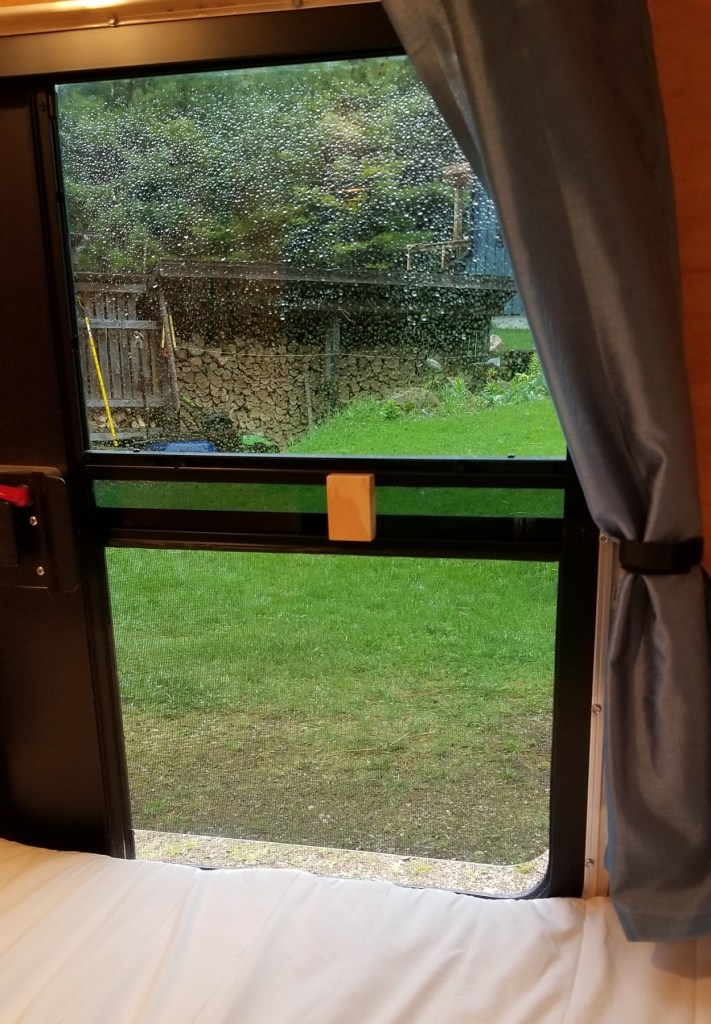
The simplest way to achieve both types of ventilation is usually the screened door windows. Though sometimes it’s not the perfect solution since having windows open (especially when in transit) brings dirt and dust in along with the air.
What’s more, depending on the windows, there may be only one or two set notches where they click open, when sometimes (like on a cool night!) you might want less airflow but not none. My workaround to that is using little blocks of wood to prop up the window halfway between closed and the first notch.
Adding Wall Vents to a Teardrop Trailer
This spring, while waiting for teardrop travel weather to finally manifest itself here in Canada, I decided to install dedicated vents on my trailer. I chose wall vents because, well, a ceiling vent just seems like it would invite leaks. Plus I have a solar panel mounted on much of my roof anyhow.
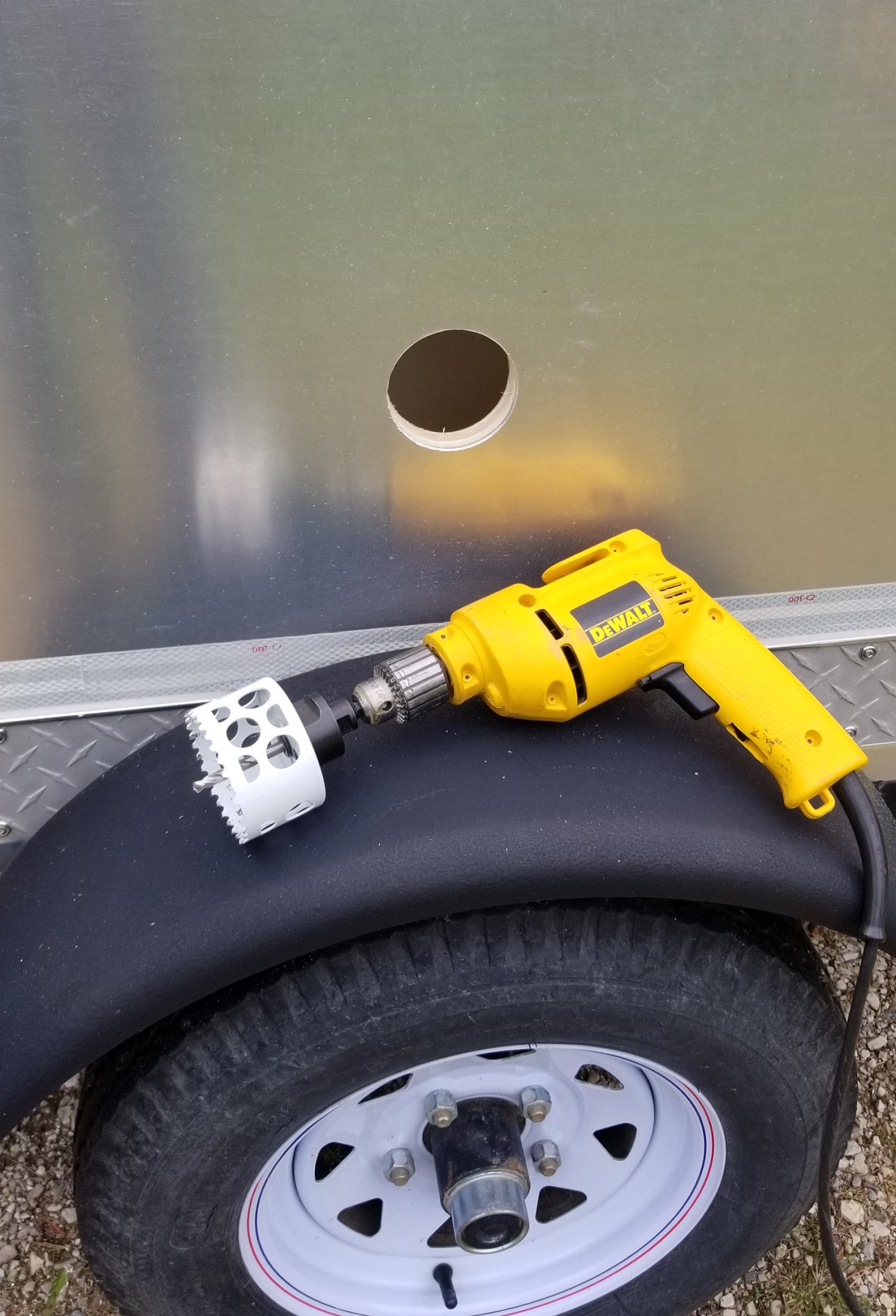
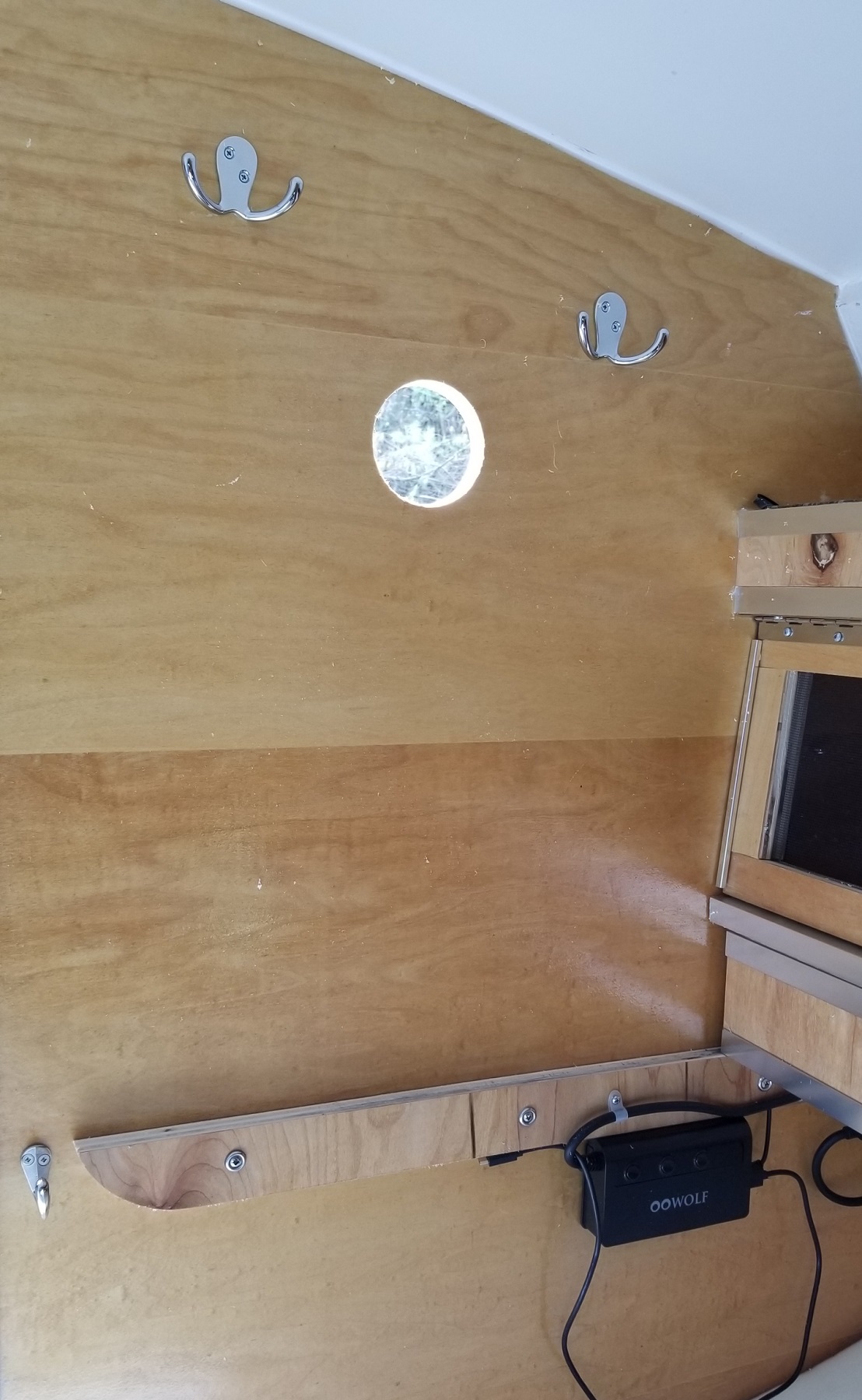
Wall vents are fairly easy to install, though be prepared for a sinking feeling when you cut holes into your beautiful Teardrop trailer! Oh, and remember that saying about measure twice, cut once. Give thought to vent position from both outside and inside perspective.

I decided to install a vent high on one side and low on the other side, with the thought that the different levels might enhance airflow when the trailer was not moving since the cabin air near the ceiling would be a bit warmer than air lower down. I can’t profess any understanding of airflow physics so this may have been a false assumption but made sense to me. I keep some painter’s masking tape in the cabin in case I ever want to “shut” the vents.
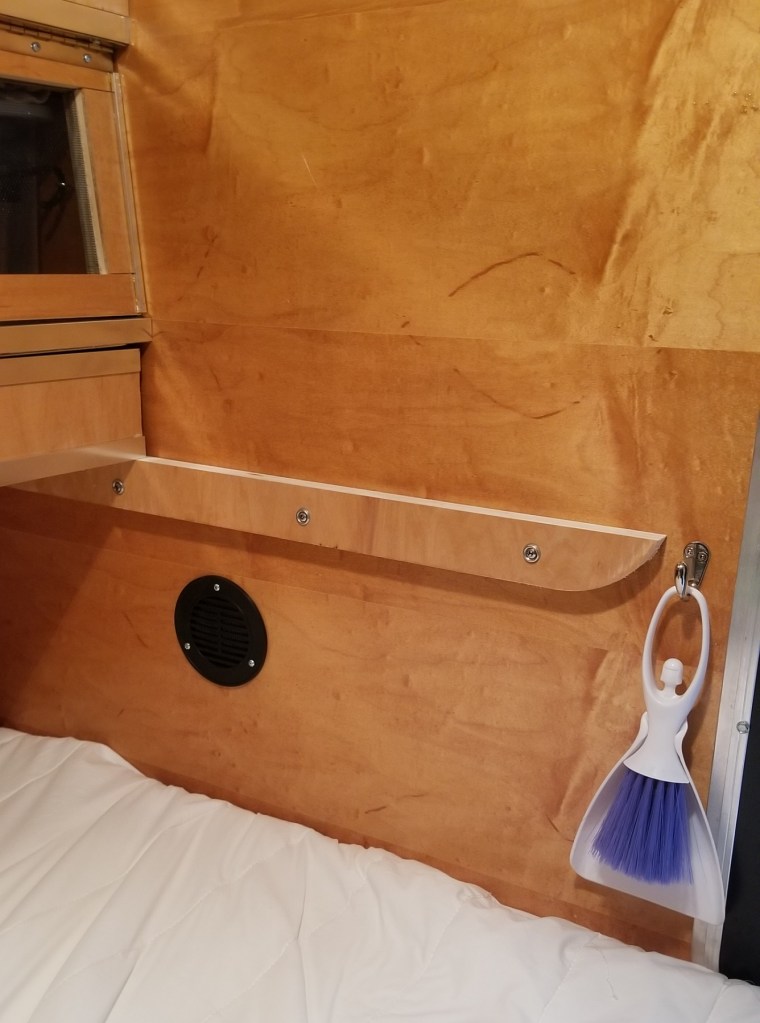

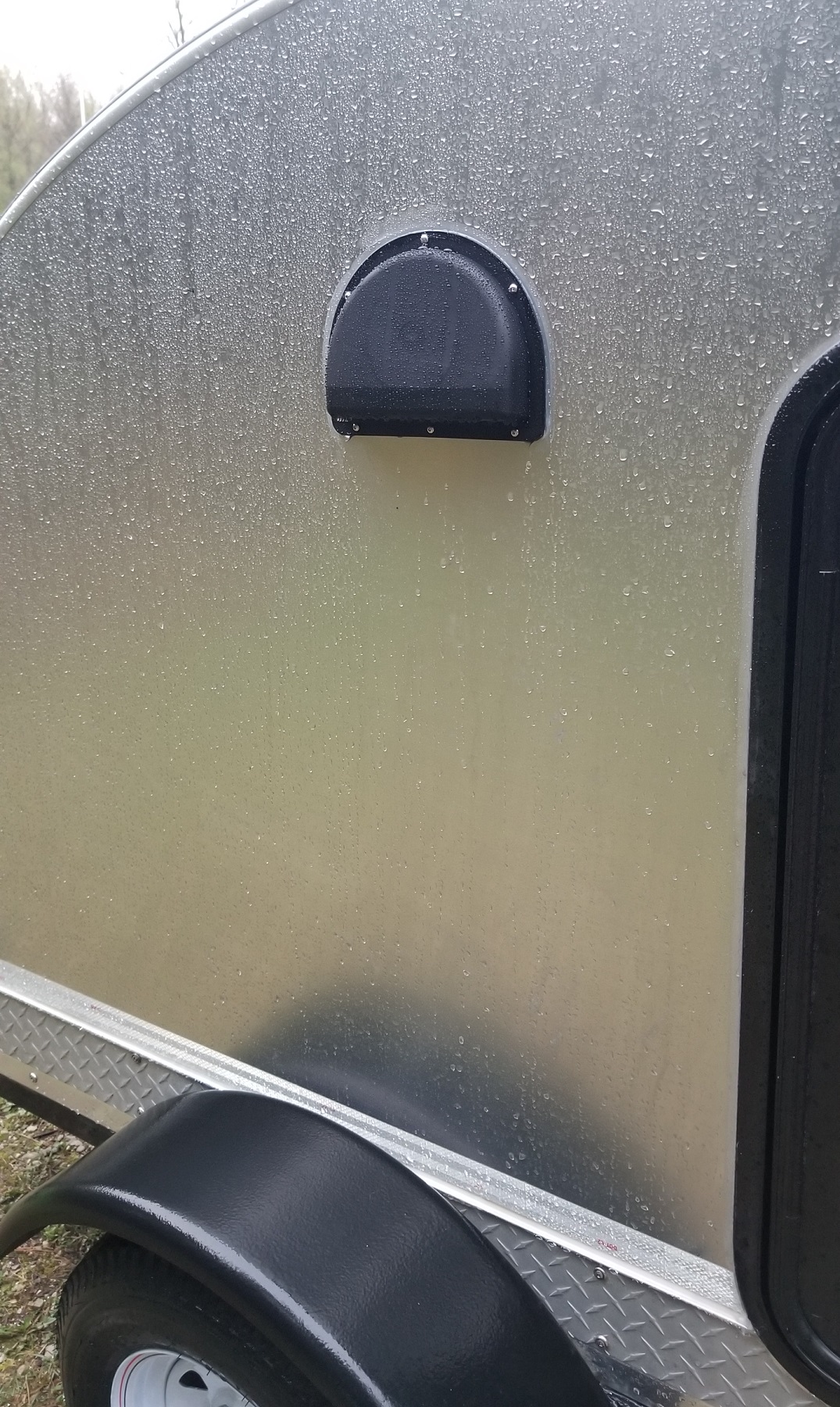
Completed project shown above. It rained the next day so good thing I did the silicone caulking straight away!
Hints & Hacks
- Be mindful to position vents in areas of the interior wall which were not likely to have obstructions like bedding or clothes hanging.
- My trailer walls are ¾” wood with exterior aluminum cladding. It was worth the money to buy a Milwaukee Dozer hole saw for my drill; it ate through both the wood and metal smoothly and with amazing speed.
- To prevent rusting, use stainless steel screws to attached the outer vent. Also, drill screw holes in the aluminum slightly larger than the screws so that they bite into the wood while having minimal contact with the metal cladding.
- Use a high quality, exterior caulking around the top and side edges of exterior vent.
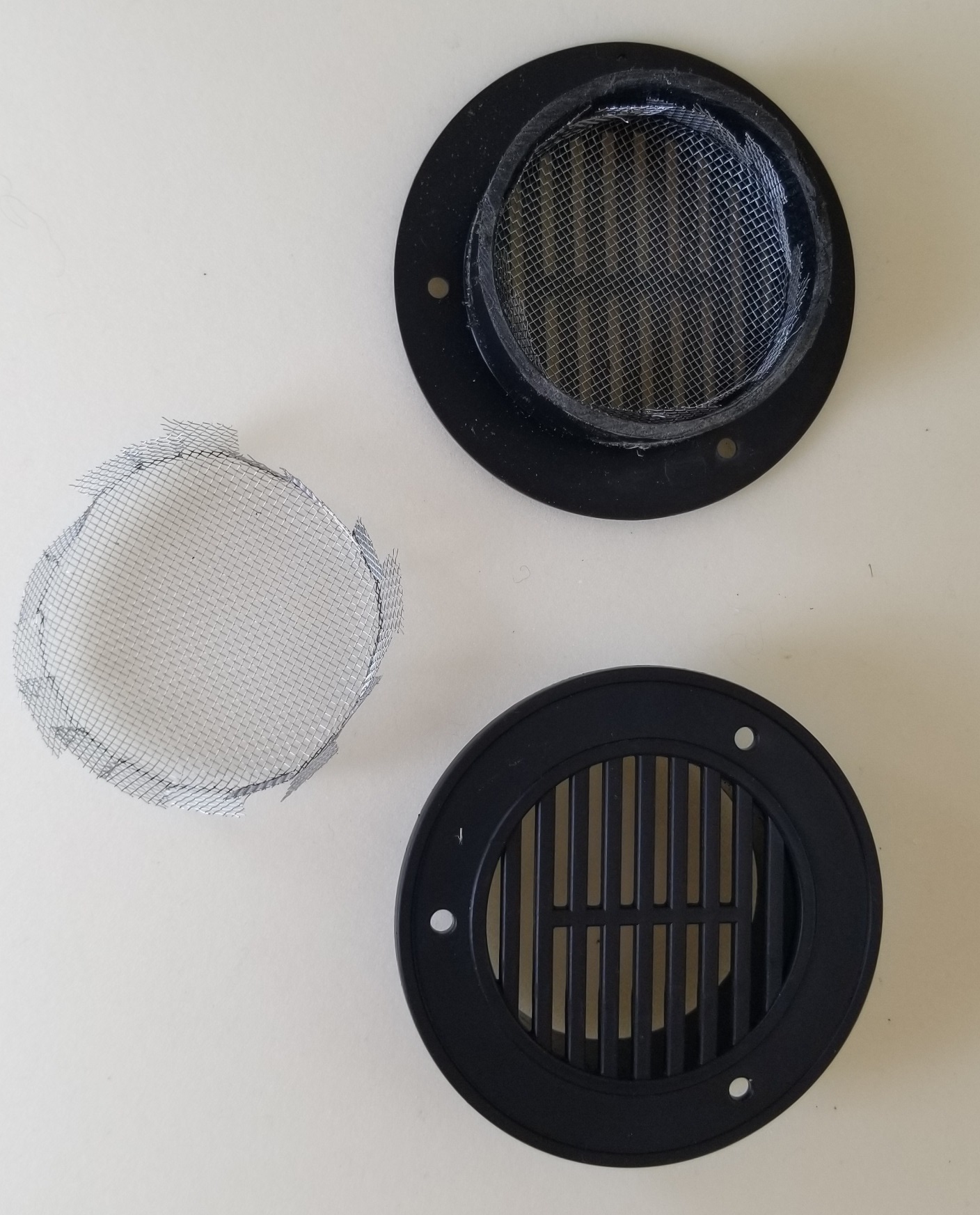
- Depending on the size of the vent louvres, it may be advisable to install insect screening somewhere between the outside and inside vent.
So, that’s how I do things with my Teardrop Trailer but by no means the full story or the best way. What about you? Add your own methods, ideas and experiences using the comment box below for the benefit of all readers.
 Teardrop Trailer Travels
I have had the same concerns on ventilation and like your choice of vents. I am heading out in a few days so just started looking around, are these on Amazon or Cdn. Tire?
LikeLike
I found the vents on Amazon..ca
LikeLike
I recently started a rebuild on a 2006 Little Guy 5 wide. It had extensive water damage. As I removed the inside wall and ceiling materials, I saw that every surface was wet. I tried it out very well and replaced rotted parts with new wood. However, I realize that much of that wetness was accumulated condensation. I am replacing the vent with proper fan and am adding the same side vents for permanent ventilation.
LikeLike
Neil, did you get your trailer from Steve and Mandy. I also want to add these vents and would like to chat. Can I contact you via email?
Brian storosko@gmail.com
LikeLike
Hi Brian – I have just written back via eMail. If you don’t see it in your Inbox check Spam folder etc.
LikeLike
Love your blog…it is as if you are writing this to me – a recent new-to-me owner of a 2017 Teardrop Trailer Co. trailer. Your article and experience with ventilation sounds excellent and I plan to do it. But I have to ask, did placing the vents in opposite positions – upper on one side, lower on the other – make a difference in airflow? Overall would you say it was a good idea and made for a better inside environment? Many thanks! Keep on teardropping! Barbara in Gatineau, QC
LikeLike
Congrats on the new-to-you Teardrop camper Barbara! Is yours one built by theteardroptrailer.com? Mine is, and I think they are one of the best values in teardrops because they come with essentials… a functional trailer as is… but also they’re also simple enough in design that there is lots of possibilities to customize as you wish.
LikeLiked by 1 person
Yes it is! I fully agree!
LikeLike
For the vents, it definitely needs two so that air can flow in one and out the other, and having them on opposite sides facilitates that. I don’t think having the vents at alternate heights, as I did with mine, would make any difference when the trailer is on the move… whichever side has slightly higher speed of air flowing past it will be the lower pressure side and thus the “outflow” vent. But when the trailer is stationary and there is little if any breeze my reasoning was that there would be a temperature differential of some sort between the interior airspace near the roof and near the mattress (allow space for bedding) and that should encourage airflow in the lower vent and out the upper vent.
LikeLike
Oh, semi-related, I mentioned in the original blog post about sticking screening inside the vents to prevent bugs like mosquitoes and blackflies from getting in. I’ve experimented with this and found the screening is unnecessary… they don’t seem to find their way through the vents… and it also cuts down airflow.
LikeLiked by 1 person
I understand your reasoning 100% so I will get that done asap. The mosquitoes are the size of small birds here by the Ottawa River so I think I will include screening!
LikeLike
When i was at River & Sky festival last week, mosquitoes came out in droves approaching dusk. At bedtime i did my usual routine in buggy conditions, which is to hop into the teardrop as quickly as possible then meticulously kill the mosquitoes inside before settling to sleep. But several times i woke during the night to yet more mosquitoes. I figured they were getting in through the vents (i had removed the screen liner last year to improve air flow) so taped them shut altogether. But still i was waking to more of the annoying little buggers flying around. The next day i took a close look at the windows.. which of course were open due to the heat… and found that at the very far left and right end of the sliding window pane there is a small 1/4″ gap with no felt. The following nights i put small pieces of tape over these gaps and no more mosquito visitors overnight.
LikeLiked by 1 person
A very good tip Neil – I will check for that gap in mine asap! Thanks!
LikeLike
Hi Neil
I installed a MaxAir exhaust fan in my Teardrop. it was designed for bathrooms and showers in RVs. It comes with the screen built in and requires a 5.25 inch round hole. it can be left open when you are driving and has a shield on the outside to prevent rain from entering. It does make a bit of noise, but I find that it does not bother my sleep. Some nights if it is really humid, I find I need the fan to really take the humidity out of the Teardrop. cheers
Al
LikeLike
That sounds really helpful to pull out warm air, and i like that it can be open while on the road. If it’s not a lot of trouble would be great if you can upload a photo of your install (or if Blog Comments feature doesn’t allow upload then email me directly and I’ll post it).
LikeLike